A client comes in with fresh highlights and wants an alignment. Another had an alignment a week ago and now wants color. Can it be done? In what order? The answer has a lot to do with a number that hardly anyone looks at: the pH of each product. Understanding it helps you plan services, explain to the client why she has to wait, and avoid results nobody wants: color that doesn't take, hair that breaks or straightening that doesn't last as long.
What pH is and why it matters for hair
pH tells you how acidic or alkaline a product is, on a scale from 0 to 14: 0 to 7 is acidic, 7 is neutral and 7 to 14 is alkaline. Each number is ten times stronger than the one before, so the difference between pH 2 and pH 4 isn't small: it's a hundredfold.
Hair and scalp are slightly acidic. That's why you hear so often that the pH of hair is between 4.5 and 5.5: the scalp has a pH of around 5.5, like the rest of the skin, and hair care products are almost always formulated in that acidic range. For the same reason, shampoos are recommended not to go above pH 5.5.
The fiber also has another number, the one chemists work with: its isoelectric point, near pH 3.7. That's the pH at which the hair's surface carries no electrical charge. The further a product moves toward alkaline, the more negative charge the fiber picks up, and you can tell: more static, more friction between strands, more tangles and more frizz. That's why, after an alkaline service, acidic products help return the hair to its natural state. Every chemical service pushes it out of that state, in one direction or the other, and what happens next depends on which direction and how far.
The pH of each service
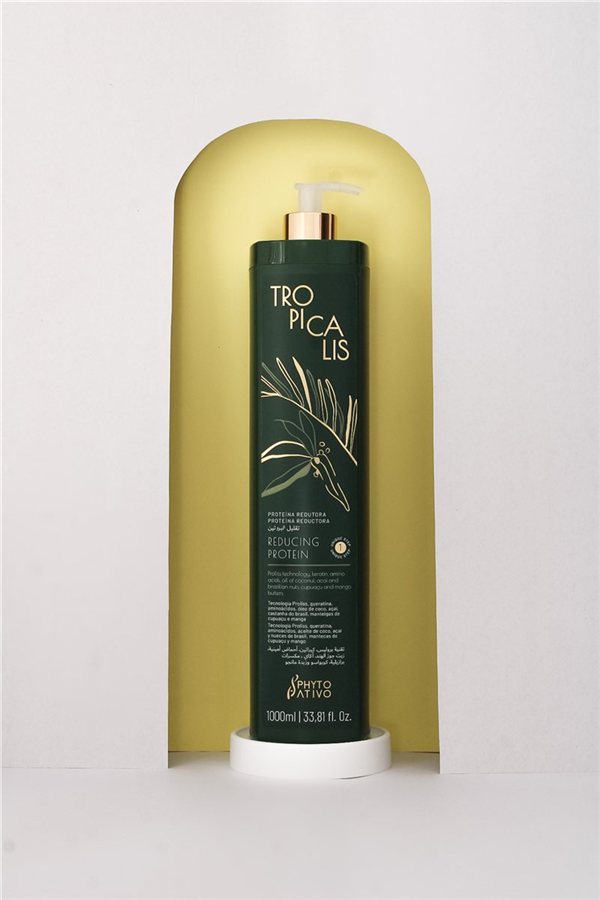
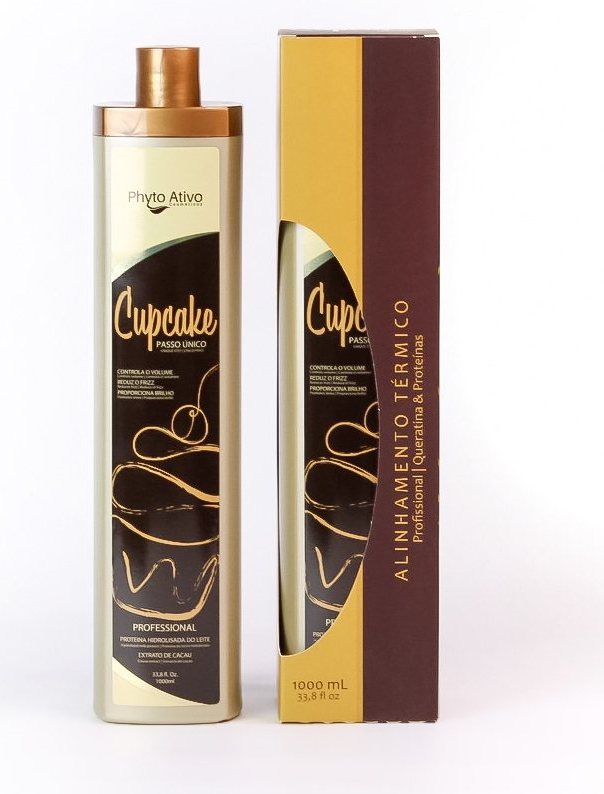
- Acidic thermal alignments (the so-called "formaldehyde-free" ones): very acidic, around pH 1.5 to 3. Some use glyoxylic acid or its derivatives, and others, like Tropicalis (pH 1.5 to 2) and Cupcake (pH 1.5) from Phyto Ativo, a combination of amino acids and proteins.
- Japanese straightening (thioglycolate): it's also flat-ironed, but it's alkaline, around pH 9. In other words, not every thermal straightening is acidic.
- Chemical relaxers: very alkaline, from pH 11 (guanidine) to 12 or 13 (hydroxides).
- Oxidation hair colors: alkaline, around pH 9 to 10.5. "Ammonia-free" ones are too, because they use a different alkalizing agent.
- Lighteners: alkaline, around pH 8.5 to 10.5.
- Peroxide: it's only acidic (pH 2 to 4) because that keeps it stable; once mixed with color or lightener, the mixture becomes alkaline.
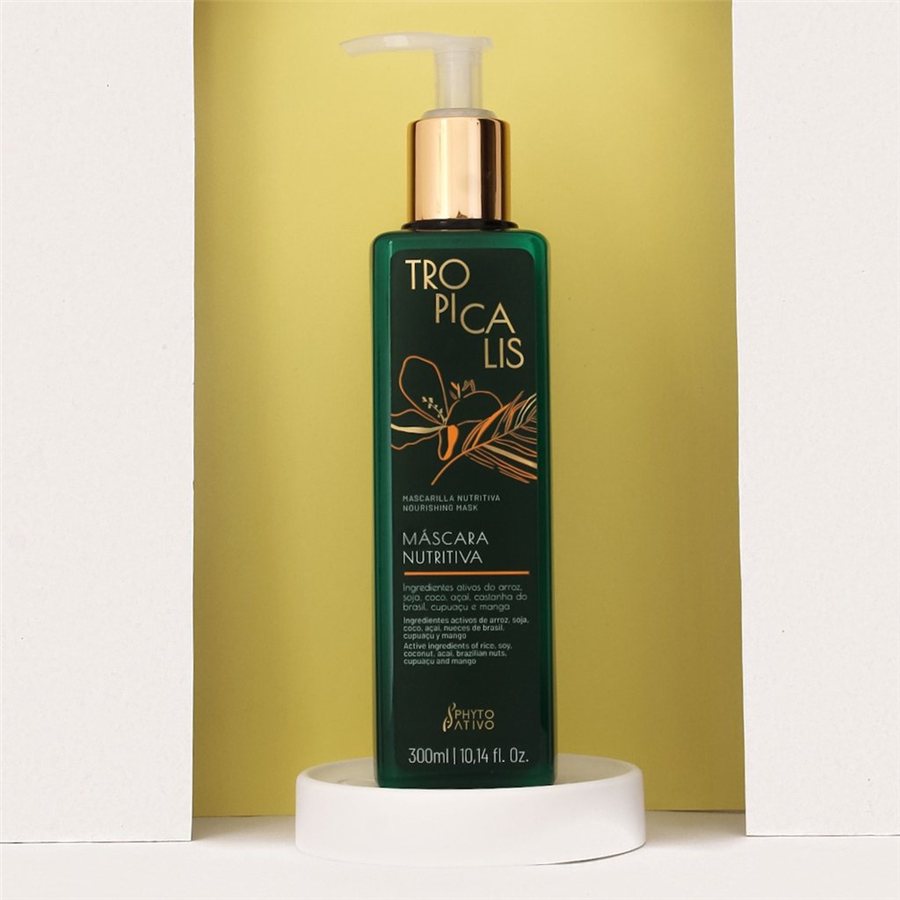
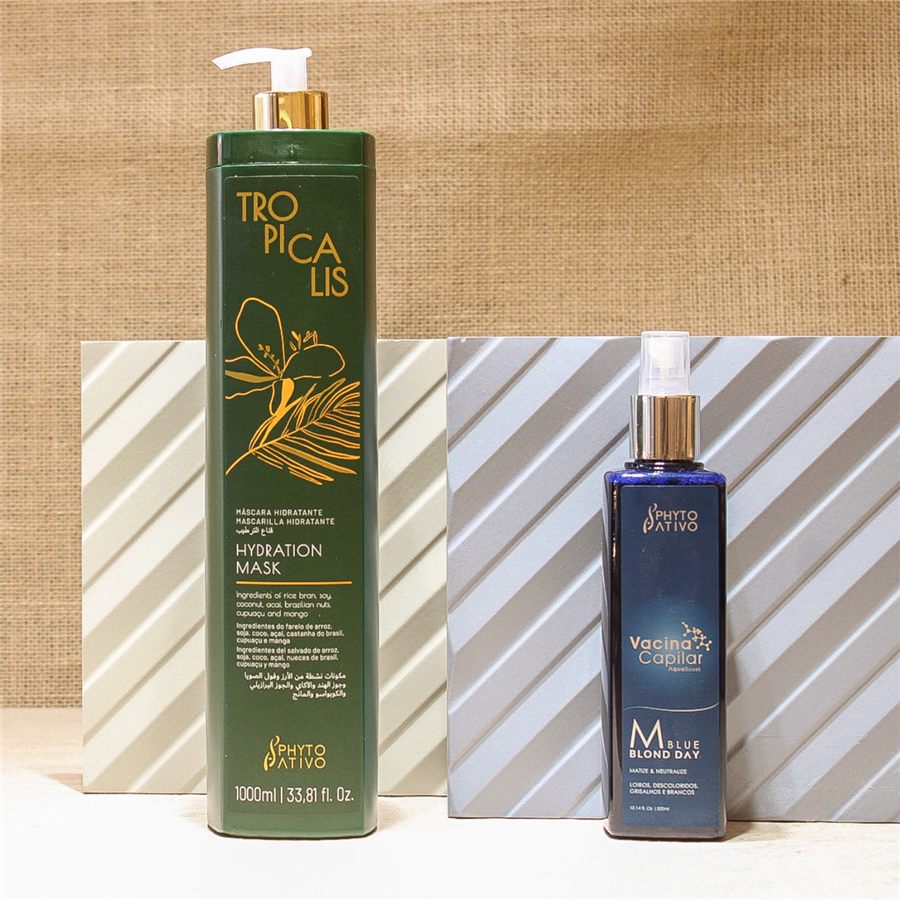
- Maintenance shampoos and masks: almost always slightly acidic, pH 3.5 to 5.5, to bring the hair back into balance. The Tropicalis Moisturizing Mask, for example, has a pH of 3.5 to 4, and the Preparing Shampoo, 5 to 5.5.
What each side does to the fiber
The alkaline side opens. An alkaline product swells the fiber and lifts the cuticle. That's how color reaches the inside of the hair and lightener acts on the natural pigment. The price is that hair becomes more porous: it absorbs more water, tangles more and loses shine if the cuticle isn't closed afterward.
The acidic side closes. An acidic product compacts the cuticle and leaves the surface smooth. That's why an acidic alignment, with the heat of the flat iron, leaves hair straight, shiny and with less volume. But the lower the pH, the stronger the action: in a study published in 2019, an acidic alignment at pH 1 straightened more than at pH 2, but it took away 16% of the hair's strength, compared with 9% at pH 2. That's why each manufacturer carefully adjusts its formula and protocol, and why they must be respected: processing time, flat iron temperature and the mask that brings the pH back into balance are part of the treatment.
When combining services backfires
- Coloring right after an acidic alignment. Alignment seals the cuticle, and that seal makes it harder for pigment to get in. That's why Phyto Ativo recommends doing Cupcake before the color service, and coloring after 5 washes. Also explain that combining very different pH levels on the same day can sensitize the hair.
- Aligning freshly bleached hair. Lightening has already weakened the fiber, and adding an alignment multiplies the damage: a 2023 study found that hair that was bleached and then acid-straightened was three times more porous and much weaker than hair that was only straightened. For bleached hair, Phyto Ativo's Cupcake protocol calls for a reduced processing time (50 minutes maximum), heat protection before brushing and a flat iron at no more than 180 °C, plus a strand test.
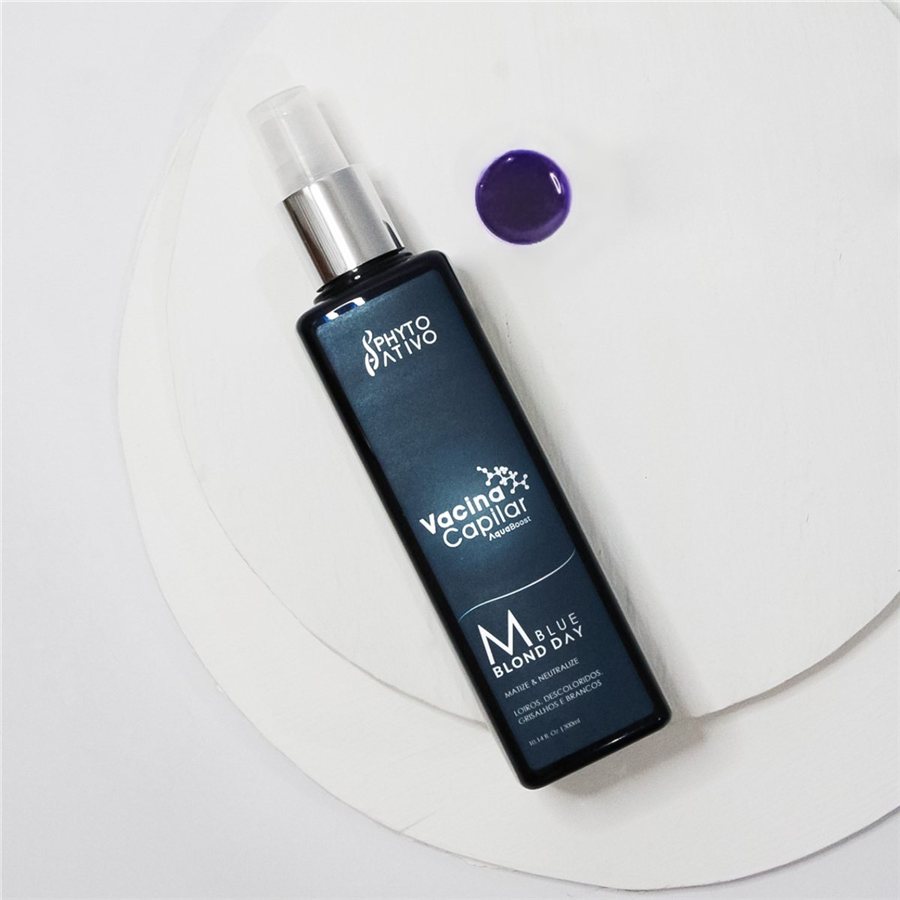
- Heat can change the color. Very high flat iron temperatures can fade or lighten color, especially on colored hair. That's why protocols call for a leave-in with high heat protection before flat-ironing and for adjusting the temperature with a strand test. On blondes, M Blue Leave-in helps neutralize yellow during the process.
- Stacking services on the same day. Every chemical service leaves the fiber more vulnerable to the next one. Going from an alkaline extreme to an acidic one in the same appointment adds up the damage of both.
- Mixing incompatible chemicals. A hydroxide relaxer over a thioglycolate straightening, or vice versa, can break the hair. And after a relaxer, permanent color is recommended at least two weeks later.
What if I color first and align afterward, on the same day?
It's one of the questions we get most: if alignment closes the cuticle and that's why you have to wait to color, why not do the color first and the alignment afterward, in the same appointment? The short answer is that it's not recommended. Phyto Ativo's technical guide, a scientific review on straightening treatments and studies on hair pH all point the same way: it's best to separate the two services. Here's why:
- Freshly applied color isn't stable yet. Right after coloring, the fiber is still alkaline, swollen and with the cuticle open; a study published in the Journal of Cosmetic Science found that a routine rinse isn't enough to bring it back to its normal pH, and that under those conditions the pigment washes out easily. A 2021 scientific review on straightening treatments recommends waiting at least two weeks between straightening and permanent color.
- Heat alignment can lighten or change the color. Phyto Ativo warns in its technical guide that very high temperatures can fade color, which is why it calls for a leave-in with high heat protection before flat-ironing. A 2019 study measured a visible color change in hair treated with an acidic alignment, and industry patents acknowledge that acidic straightening with a flat iron lightens colored hair. If the color was just applied, it loses the most: the client would be paying for a color that doesn't even last a day.
- The damage adds up. Going within a few hours from a pH of around 10 to one of 1.5 or 2, and then to a flat iron at 180 to 230 °C, is the scenario that punishes the fiber the most. With lightening it has already been measured: the hair ended up three times more porous. With color the effect is smaller, but it goes in the same direction.
Deposit-only colors are a different story. Those that don't use developer or ammonia, like color masks, don't open the cuticle the way permanent color does; the same scientific review indicates that semi-permanent and temporary colors can be applied together with straightening, and they're the right choice for refreshing the tone afterward. For permanent color, each brand has its own rule, so check the technical data sheet. In the case of Cupcake, as we saw above, Phyto Ativo calls for the alignment first and color after 5 washes.
The recommended order
There's no single schedule that works for every product: each one's technical data sheet is what counts. But some principles hold true across the board:
- 1. Diagnosis first. Ask the client what she's had done to her hair and when, even if it was at another salon. Check the scalp: with cuts, irritation or dermatitis, no chemical service is done.
- 2. Strand test. It's the only way to know how that particular hair will respond: timing, temperature and whether the color changes.
- 3. One strong service per appointment. If the client wants color and alignment, it's best to separate them and respect the waiting time each manufacturer specifies.
- 4. Close what you opened. After an alkaline service, finish with an acidic-pH product, such as a mask, to bring the cuticle back into balance.
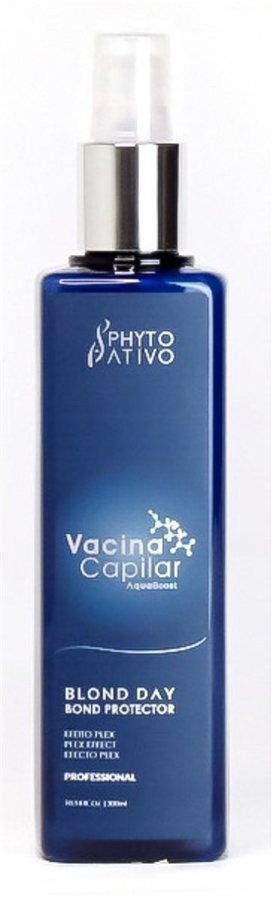
- 5. Protect the most sensitive hair. On fine or chemically treated hair, use a lower temperature and fewer passes, plus a bond protector like Bond Protector on the most sensitive areas and the ends.
Quick questions
Is hair pH 3.7 or 4.5 to 5.5?
Both numbers are correct, but they measure different things. 4.5 to 5.5 is the acidic range of the scalp (around 5.5) and of hair care products. 3.7 is the fiber's isoelectric point: the pH at which its surface carries no electrical charge.
Can I color and align on the same day if I color first?
It's not recommended: freshly applied color isn't stable yet and heat alignment can lighten it, and on top of that the damage adds up. If the color needs refreshing, the right choice is a deposit-only color, with no developer or ammonia; for permanent color, wait as long as each product's data sheet says.
Why do I have to wait to color after an alignment?
Because the acidic alignment seals the cuticle and pigment has a harder time getting in. For Cupcake, Phyto Ativo recommends coloring after 5 washes; for every product, follow its technical data sheet.
Is a low-pH alignment dangerous?
It's a professional chemical treatment and must be used as the manufacturer directs: timing, temperature, no application on the scalp, and the mask that restores the pH. Followed to the letter, the risk to the hair drops considerably.
Can ammonia-free color be done the same day as the alignment?
It's still alkaline, so the same rule applies: better in separate appointments and with the waiting time the manufacturer specifies.
What should I do if my hair is already very damaged?
A strand test, lower temperature and fewer passes, a bond protector, and if the strand can't take it, don't do the service. First restore the fiber with treatments.
Sources: Phyto Ativo, technical presentation for Puerto Rico (2026); Goshiyama et al., J Cosmet Dermatol, 2019 (pH of acidic straighteners); Lima et al., J Appl Crystallogr, 2023 (bleached and straightened hair); Barreto et al., Skin Appendage Disord, 2021 (relaxers and thioglycolate); Gavazzoni Dias et al., Int J Trichology, 2014 (hair pH); Journal of Cosmetic Science, vol. 67 (hair pH after coloring); patent US10456341 (acidic straightening and color).