On our product pages you'll see phrases like "free from parabens, SLS, SLES and paraffin" or "no ammonia or PPD." They're important details, but often nobody explains what each one is or why some formulas leave it out. In this article we go ingredient by ingredient: what it does, why some brands prefer not to use it, and what it means for your hair and scalp.
Parabens
What they are: preservatives (methylparaben, propylparaben, butylparaben and others) that have been used for decades to keep fungi and bacteria from growing in the product.
Why some people avoid them: studies have looked at whether some might weakly mimic hormones in the body. The FDA states it has no information showing that parabens, as used in cosmetics, affect health. The European Union, as a precaution, banned some parabens and limited the concentration of others.
What "paraben-free" means: that the product is preserved with other systems. A product with no preservative at all would become contaminated in a short time, so "paraben-free" never means "preservative-free."
SLS (sodium lauryl sulfate)
What it is: a surfactant, that is, the ingredient that cleans and lathers. It's very effective at removing oil and dirt.
Why some formulas leave it out: precisely because it cleans so well, it can also strip away the natural oils of the hair and scalp. In people with sensitive skin it can cause dryness, itching or irritation. On color-treated hair it can make color fade sooner, and on straightened hair it can shorten how long the treatment lasts.
SLES (sodium laureth sulfate)
What it is: the most widely used cleanser in shampoos, including many professional shampoos. It's the gentle version of SLS: a process called ethoxylation makes the molecule larger, so it's much less irritating to the skin. It cleans well, produces a creamy lather and rinses out easily.
What you need to know: in a professional shampoo, SLES doesn't work alone. It comes with conditioning agents, oils, proteins and an adjusted pH, and that combination is what lets the shampoo clean without drying. That's why two SLES shampoos can behave very differently, and a well-formulated one is perfectly suitable for daily use, including on color-treated or straightened hair.
Why some formulas leave it out: some people with very sensitive scalps tolerate even gentler cleansers better, and some manufacturers recommend a sulfate-free shampoo right after certain treatments. There's also talk that traces of 1,4-dioxane can remain from ethoxylation; manufacturers control this in their process and the FDA monitors that it's kept to a minimum. For most hair, a good professional shampoo with SLES is an excellent choice.
MIT (methylisothiazolinone)
What it is: a very effective preservative in small amounts.
Why some formulas leave it out: it's one of the best-known causes of contact allergy on the skin: redness, itching or eczema on the scalp, forehead or the hands of whoever applies the product. That's why the European Union banned it in leave-on products and strictly limited the amount in rinse-off products. For the stylist, whose hands are in contact with products all day, avoiding it is a real advantage.
PPD (paraphenylenediamine)
What it is: a component of many oxidation hair colors that helps produce intense, long-lasting colors, especially dark ones.
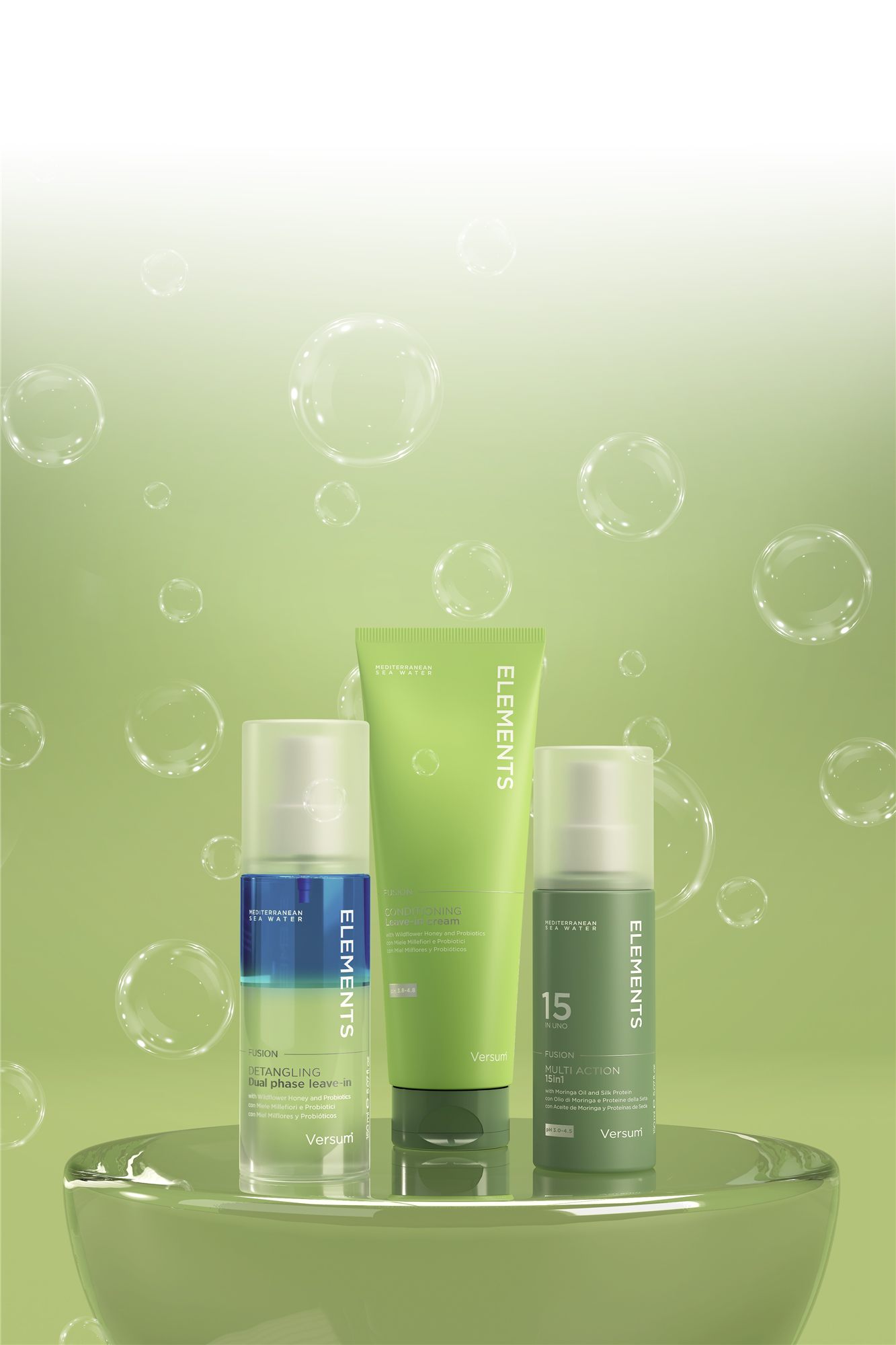
Why some formulas leave it out: it's a potent allergen; in sensitive people it can cause strong reactions on the scalp and face. That's why hair color labels say to do an allergy test before applying them, usually 48 hours ahead, whether or not they contain PPD. Versum's Easy Color, both regular and ammonia-free, is PPD-free.
Ammonia
What it is: an alkalizing agent that opens the cuticle so the color can enter the fiber and be activated by the developer.
Why some formulas leave it out: it has a strong odor and can irritate the eyes, nose and scalp. Ammonia-free colors use other, gentler alkalizing agents with less odor. It's important to know that "ammonia-free" doesn't mean "chemical-free": the color still needs to open the cuticle, it just does so more gently. Versum's Easy Color Ammonia Free covers gray, contains no ammonia or PPD and has marine collagen.
Paraffin and mineral oils
What they are: petroleum derivatives that form a film over the hair and give instant softness.
Why some formulas leave them out: they sit on top of the fiber instead of nourishing it, can weigh hair down, especially fine hair, and build up if not cleaned off well. Paraffin-free formulas favor plant oils, such as argan, flaxseed or Amazonian oils.
Cocamide DEA and MEA
What they are: thickeners and foam stabilizers derived from coconut oil.
Why some formulas leave them out: the state of California added cocamide DEA to its Proposition 65 list of cancer-related substances, based on animal studies. Many brands stopped using them as a precaution.
Silicones and PEG
Silicones (such as dimethicone): they add shine, slip and heat protection. They aren't toxic, but some build up layer after layer and weigh hair down unless you occasionally use a shampoo that removes them. That's why silicone-free formulas are recommended for fine and curly hair.
PEG (polyethylene glycols): they help blend water and oil ingredients. Some brands prefer not to use them because, as with SLES, traces of 1,4-dioxane can remain from manufacturing, which the manufacturer controls in its process.
Formaldehyde (formalin)
What it is: a substance that has been used as a preservative and, above all, in straightening treatments, because it sets the hair in its new shape. It's a known carcinogen, and its fumes are a risk for everyone in the salon, the stylist most of all, because she breathes them every day. The FDA warns about straighteners that release formaldehyde when heated with the flat iron.
"Formaldehyde-free" on the label isn't always enough. OSHA, the U.S. workplace safety agency, tested straighteners advertised as "formaldehyde free" and found formaldehyde in several of them, and fined manufacturers and distributors for mislabeling them. Formaldehyde often appears under another name: dissolved in water it's called methylene glycol, and there are other ingredients that release it when heated with the flat iron or blow dryer.
Warning signs when applying a straightening treatment
If any of these happen during application or flat-ironing, stop, ventilate and check which product is being used:
- Burning or watery eyes, in the stylist or the client.
- Itching or burning in the nose and throat, and in severe cases nosebleeds.
- Coughing, wheezing or feeling short of breath.
- Smoke and a strong odor when the flat iron passes over.
- Itching, burning or a rash on the scalp, face or hands.
These are the symptoms OSHA and the FDA describe for formaldehyde exposure. Note: irritation can also be caused by other strong ingredients, such as some acids used in "formaldehyde-free" straighteners, so feeling it doesn't prove by itself that the product contains formaldehyde, but it is reason enough to stop using it until you find out.
How to tell whether a straightening treatment contains formaldehyde
- Read the ingredient list and look for formaldehyde, formalin, methylene glycol or methanediol.
- Ask for the safety data sheet (SDS). When a product contains formaldehyde above certain levels, the law requires the hazard to appear on the label and on the safety data sheet. OSHA warns that not every company declares it as it should, so it's not an absolute guarantee.
- Ask for a lab analysis. A reputable manufacturer can back up its "formaldehyde-free" claim with a product analysis.
- Don't go by what people say about coloring before or after. You hear that if a straightening treatment lets you color right away it's because it contains formaldehyde, or the opposite, but we haven't found a reliable source that confirms it. When to color is stated on each product's data sheet; whether it contains formaldehyde is shown by the ingredients and lab analysis.
Gloves are necessary with any chemical treatment, whether it contains formaldehyde or not: they protect the hands of the stylist, who is in contact with products all day. And a well-ventilated salon is always the best protection.
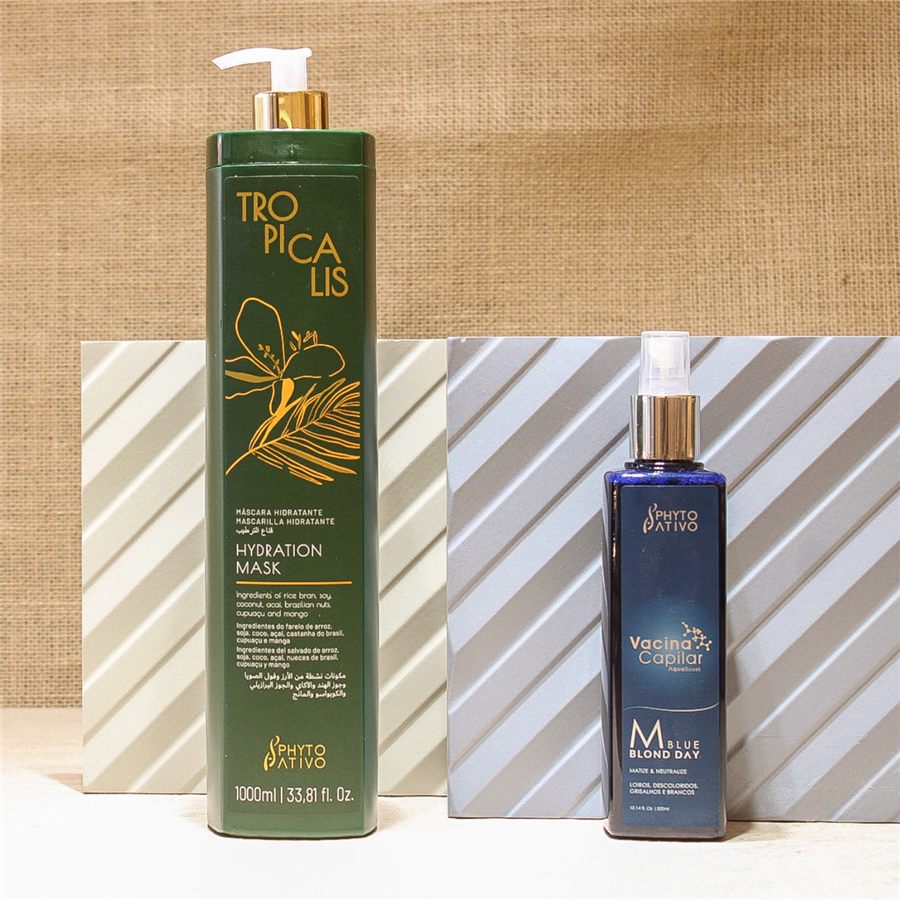
The thermal alignments we distribute, such as Tropicalis and Cupcake from Phyto Ativo, are formaldehyde-free according to their technical data sheets, and we've asked the manufacturer for written confirmation so we can publish it.
How to explain it in one sentence
For the stylist or sales representative who has to explain it in the salon, here's a summary that works: "Free from means that, for that product, the brand chose an alternative: for example, preservatives with a lower allergy risk, or plant oils instead of mineral oils. A product that does contain one of these ingredients, in the permitted amounts, is also safe and effective. What matters is the complete formula and choosing the right product for each type of hair".
How to read a label
- Ingredients are listed from highest to lowest amount. The first ones carry the most weight in the formula.
- The names are in Latin or English (INCI system): "Sodium Lauryl Sulfate" is SLS, "Sodium Laureth Sulfate" is SLES, "Methylisothiazolinone" is MIT, "Paraffinum Liquidum" is paraffin.
- The open jar symbol (PAO), with a number and an M, tells you how many months the product lasts after opening.
- "Free from" refers to that product, not to the whole brand: check each product's page.
Quick questions
Is a product with sulfates bad?
No. Most professional shampoos contain some sulfate, usually SLES, which is the gentlest. A well-formulated SLES shampoo cleans without drying because the rest of the formula balances it. Sulfate-free shampoos are an option for very sensitive scalps or when the manufacturer recommends one after a treatment.
Is "natural" the same as "free from"?
No. "Natural" has no regulated definition for cosmetics. "Free from" does say something specific: that the ingredient isn't in the formula.
If I have an allergy, is it enough that it says "free from"?
No. If you have a diagnosed allergy, check the full ingredient list and consult your dermatologist. And always do an allergy test before coloring.
Sources: U.S. Food and Drug Administration, Parabens in Cosmetics, 1,4-Dioxane in Cosmetics and Hair Dyes; European Commission Regulations (EU) 2016/1198 and 2017/1224 (methylisothiazolinone); California OEHHA, Proposition 65 (cocamide DEA); Occupational Safety and Health Administration, Hair Salons: Facts about Formaldehyde in Hair Products; Versum and Phyto Ativo technical data sheets.